This semester, I took a class called Israeli-Palestinian Peacebuilding (IAFF 3352), which took a dual narrative approach to studying their history. This meant analyzing various historical developments from the perspectives of both Israelis and Palestinians, identifying ‘chosen traumas’ that drive the intractable nature of the conflict. The capstone of the class was intended as two papers analyzing a ‘final status issue’, meaning a key matter that needs to be resolved before peace can be brought about. Options included water sharing policy, territorial disputes, and more. For my analysis, I chose to discuss the split between Hamas and Fatah, synthesizing a comprehensive story of the roots of their schism and addressing its implications for the peace process. (Un)fortunately, the professor was a bit slow with grading, and cancelled the second paper, which was supposed to be more oriented towards analysis using peace studies literature. As some consolation, I have decided to take elements of the paper I did write, expand upon them a bit, and turn it into a blog post.
PART I: Historical Background.
The Rise of Fatah and the PLO.
The logo of The Palestinian National Liberation Movement, better known as Fatah.
During the 1948 Arab-Israeli War, hundreds of thousands of Palestinians were displaced from their homes in an event known as the Nakba, scattering to the winds. Taking refuge in neighboring Arab states, primarily Jordan, Lebanon, Syria, and Egypt, these refugees faced poor living conditions and societal marginalization. By 1959, the frustrations of this new Palestinian Diaspora had come to a head. Disinterested in being wrapped into the broader rhetoric of Arab nationalism, a group of Palestinian exiles led by Yasser Arafat founded the Fatah movement. Rejecting reliance on Arab states, which had failed to prevent the establishment of Israel, Fatah initially adopted the principle of armed struggle as the primary means of liberating Palestinian territories. As such, Fatah operated as a clandestine organization, gaining support through grassroots networks to shape a violent resistance movement independent of external political agendas. Through these early activities, Fatah made a name for itself as the vanguard of the Palestinian nationalist struggle, prioritizing the liberation of Palestine as a goal distinct from pan-Arab ambitions. (Adwan et al., 227-229)

Yasser Arafat (left) with members of the newly founded PLO. Credit: Al Jazeera
By 1967, with the end of the Six-Day War, Fatah had become a dominant force in Palestinian politics, joining the Palestine Liberation Organization (PLO). In 1969, Fatah leader Yasser Arafat became the chairman of the PLO, cementing Fatah as the new voice for the Palestinian diaspora. The PLO established itself first in Jordan, launching rockets into Israel from the border with the tacit support of the Jordanian government.
Eventually, the PLO’s presence in Jordan grew unwelcome, and the Jordanian military forcibly evicted the group in September of 1970 in a series of incursions since dubbed “Black September”. (Encyclopedia.com) Retreating increasingly far from Palestine proper, Fatah and the PLO continued guerilla attacks against Israel as time went on. Smoke rises over the Jordanian capital after clashes between the Jordanian military and the PLO.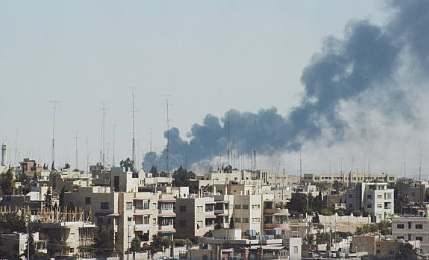
Furthermore, during the seventh Arab summit in October of 1974, the Arab League declared the PLO the sole legitimate representative of the Palestinian people, affirming their right to push for the establishment of an independent national authority. (Al Madfai, 21) A month later, in November of 1974, the UN adopted resolutions 3236, which recognized the Palestinian right to self-determination, and 3237, which granted the PLO observer status in the general assembly. (Adwan et al., 229) Now, the PLO, with Fatah at its head, was the voice of the Palestinian people in the eyes of the international community.
The First Intifada and the Formation of Hamas.
On a cold December day in 1987, an Israeli truck driver collided with several parked vehicles in the Jabalia refugee camp. Four Palestinians were killed. Alleging that the incident was a deliberate retaliation for the recent killing of an Israeli in Gaza, Palestinians throughout the occupied territories rose up in revolt. So began the First Intifada.

An IDF roadblock near Jabalia, built in response to civil unrest. Credit: יעקב
Organized locally through grassroots community councils, the uprising was initially remarkably nonviolent. Demonstrations, civil disobedience, strikes, boycotts, and other forms of peaceful protest were employed judiciously against the Israeli government, which responded with overwhelming military force. However, the First Intifada represented not only a rebellion against the oppression of the Israelis but also against the performance of the PLO. The PLO had clearly failed to alleviate Palestinian suffering, instead engaging in fruitless international terrorism. Furthermore, the grassroots nature of the Intifada, later organized by the United National Leadership of the Uprising (UNLU), undermined the status of the PLO as the sole voice for the Palestinian people. (Ben-Ami, 189)

The logo of the Islamic Resistance Movement, abbreviated Hamas.
Just days after the outbreak of the First Intifada, members of the Muslim Brotherhood gathered to proclaim the founding of a new militant organization to coordinate underground Islamic resistance. Never lacking in creativity, they dubbed their new Islamic resistance movement “The Islamic Resistance Movement”, abbreviated as Hamas. Hamas differentiated itself from Fatah in a few crucial ways, none more clear than its nature as an Islamic organization. While both Hamas and Fatah were Palestinian nationalist groups, Hamas portrayed the struggle against Israel as a holy war. To Hamas, fighting Israel represents a religious duty for all muslims, while Fatah operates on the basis of secular nationalist principles. This distinction is best illustrated by the following passages from the Hamas Charter, established in August of 1988:
“Palestine is an Islamic land… Since this is the case, the Liberation of Palestine is an individual duty for every Moslem wherever he may be.” (Article 13) (Laqueur, 340)
“The day the enemies usurp part of Moslem land, Jihad becomes the individual duty of every Moslem. In the face of the Jews’ usurpation, it is compulsory that the banner of Jihad be raised.” (Article 15) (Laqueur, 340)
This religious framing held great allure among younger Palestinians, who had grown disillusioned with the floundering PLO, which was increasingly seen as corrupt. Compounding this appeal, Hamas operated social welfare programs, establishing schools and healthcare facilities throughout the occupied territories. Soon, thousands flocked to join this burgeoning religious resistance, such that by the end of the First Intifada, Hamas was firmly established as a key player in Palestine. (Ben-Ami 283-286) For the leaders of the PLO, now undermined on several fronts, it was clear that substantial change was necessary.
A More Diplomatic PLO?
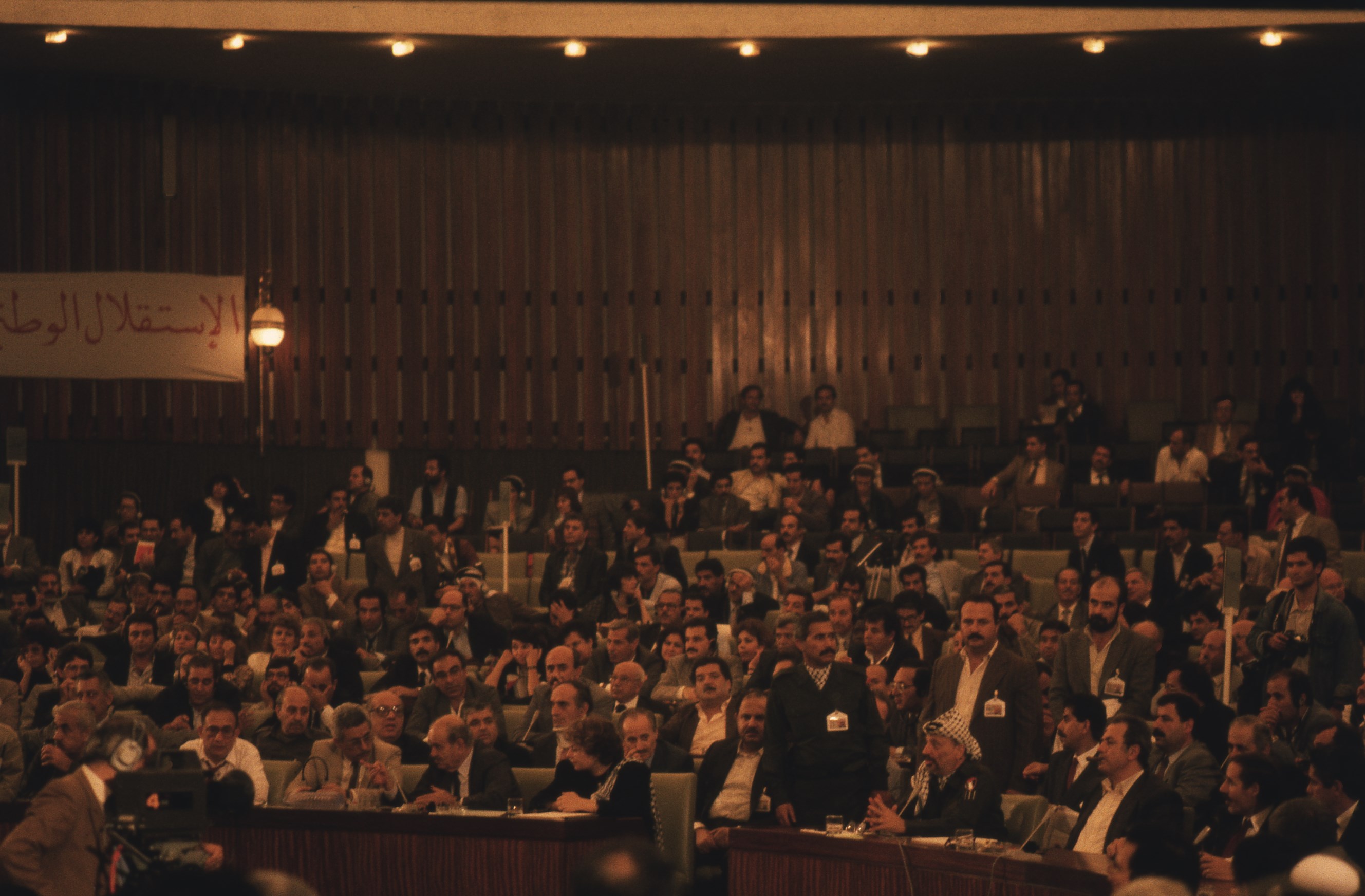
The 19th Palestinian National Congress convenes in Algiers. Credit: Institute for Palestine Studies
Approved in November of 1988 by the PLO’s legislative body with a vote of 253 in favor, 46 against, and 10 abstaining, the Palestinian Declaration of Independence marked a departure from the militant ways of the past. The PLO had long adhered to a maximalist position that sought the liberation of all historic Palestine through militant violence, as reflected in its early charters. However, by declaring independence, the PLO, under Arafat’s leadership, shifted its strategy to align with international legal frameworks and embrace a two-state solution based on the 1967 borders. For the first time, albeit implicitly, the PLO acknowledged the existence of Israel. Recognizing that international legitimacy and support were critical to advancing the Palestinian cause, the PLO signaled that they were ready to work towards a diplomatic solution with the Israelis, with the help of the international community. Also notably, the declaration invoked UN Resolution 181, departing from the PLO’s historic position against the resolution:
“Despite the historical injustice inflicted on the Palestinian Arab people resulting in their dispersion and depriving them of their right to self-determination, following upon UN General Assembly Resolution 181 (1947), which partitioned Palestine into two states, one Arab, one Jewish, yet it is this resolution that still provides those conditions of international legitimacy that ensure the right of the Palestinian Arab people to sovereignty.” (Laqueur, 353)
Thus, by adopting a more conciliatory, pragmatic approach, the declaration made clear Fatah’s transformation from a revolutionary movement into a political entity focused on achieving statehood.
With this shift, Hamas and the PLO were suddenly substantially at odds with each other. To make clear as to why, here is what the Hamas charter says about negotiated settlements:
“[Peace] initiatives, and so-called peaceful solutions and international conferences are in contradiction to the principles of the Islamic Resistance Movement… Those conferences are no more than a means to appoint the infidels as arbitrators in the lands of Islam… There is no solution for the Palestinian problem except by Jihad. Initiatives, proposals and international conferences are but a waste of time, an exercise in futility.” (Article 13) (Laqueur, 340)
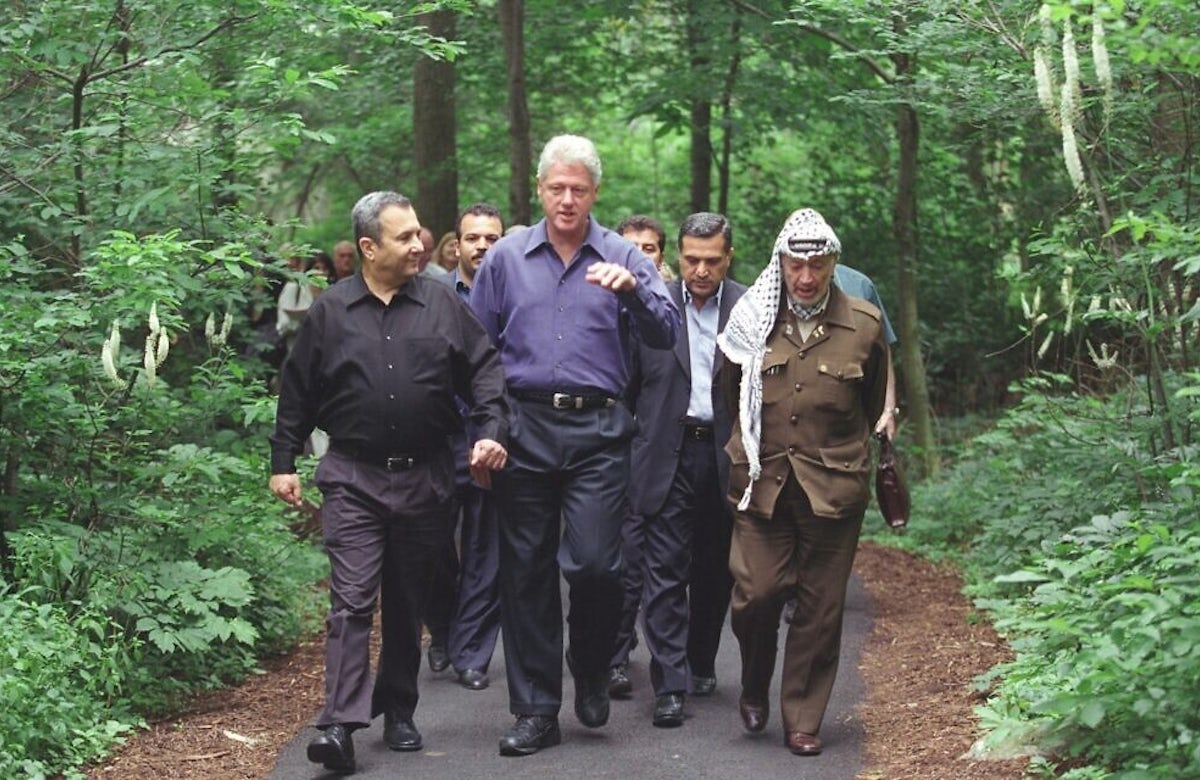
Ehud Barak, Bill Clinton, and Yasser Arafat at Camp David.
Regardless, the PLO set forth to make good on its declaration, negotiating the Oslo accords in 1993 and 1995. Israel and the PLO recognized each others’ legitimacy, establishing the Palestinian Authority to exercise limited administrative control over certain territories. Overnight, the PLO went from a guerilla militant group to a government. Hamas, meanwhile, stuck to its principles, emerging as the leading voice among Palestinians against the PLO’s diplomatic strategy. Further, Hamas did not merely stick to vocal opposition, launching attacks with the aim of disrupting negotiations. For instance, Hamas militants carried out a suicide bombing on a bus in Jerusalem in February of 1996, attempting to undermine the newly established Oslo framework. Hamas took a similar position during the 2000 Camp David Summit, condemning the talks and attempting to disrupt them through violence. This dialed up the heat on Arafat and the PLO, contributing to the failure of negotiations and the subsequent breakout of the Second Intifada. (Schanzer, 42)
The Second Intifada and the Bifurcation of Palestine.
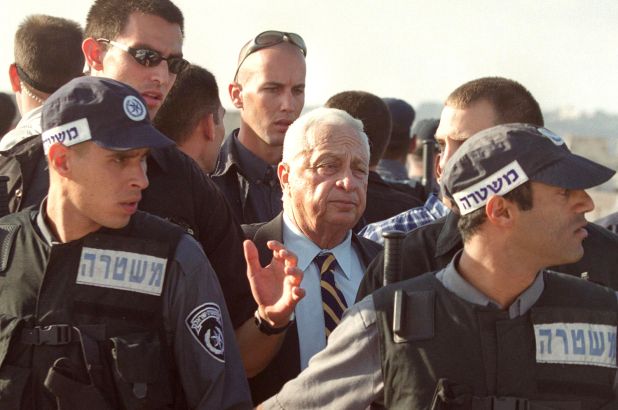
Ariel Sharon visits the Temple Mount on September 28, 2000.
In the years since 2000, there has been much debate as to the causes of the Second Intifada. Some say that it was planned by Arafat in the wake of Camp David, others that it was catalyzed by Ariel Sharon’s visit to the Temple Mount, 1,000 security guards in tow. Regardless, the years between 2000-2005 were characterized by widespread violence throughout the Palestinian territories, with both Hamas and the PLO turning to armed resistance against Israel. (Schnazer, 49) Despite their ideological differences, the Second Intifada brought the groups together at times, with them aligning against their shared enemy on a tactical level. For example, during the Siege of the Jenin Refugee Camp in 2002, Fatah and Hamas forces coordinated to combat the IDF. (Ahmed)
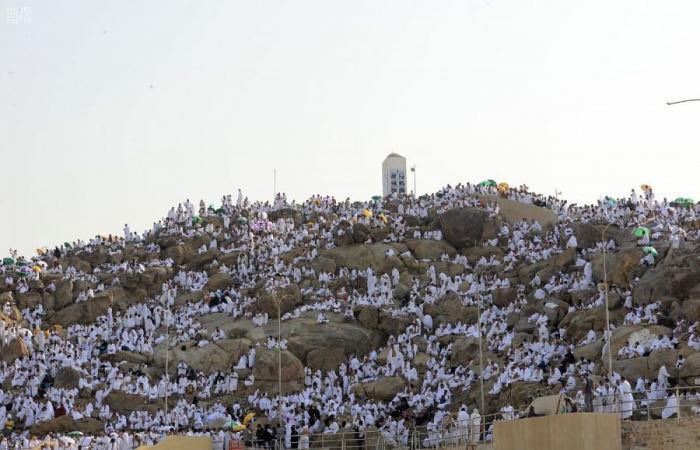
Arafat is laid to rest. Credit: Associated Press
With Yasser Arafat’s death in 2004, Palestinians lost their leader and the momentum for the uprising began to fade. This was a massive blow to the PLO, which had relied on Arafat’s popular leadership to maintain legitimacy. As such, in 2006, aspiring to renew the government’s mandate, the Palestinian Authority held its second-ever elections. Surprisingly, Hamas announced that it would participate in the race as a political party. (Tahhan)
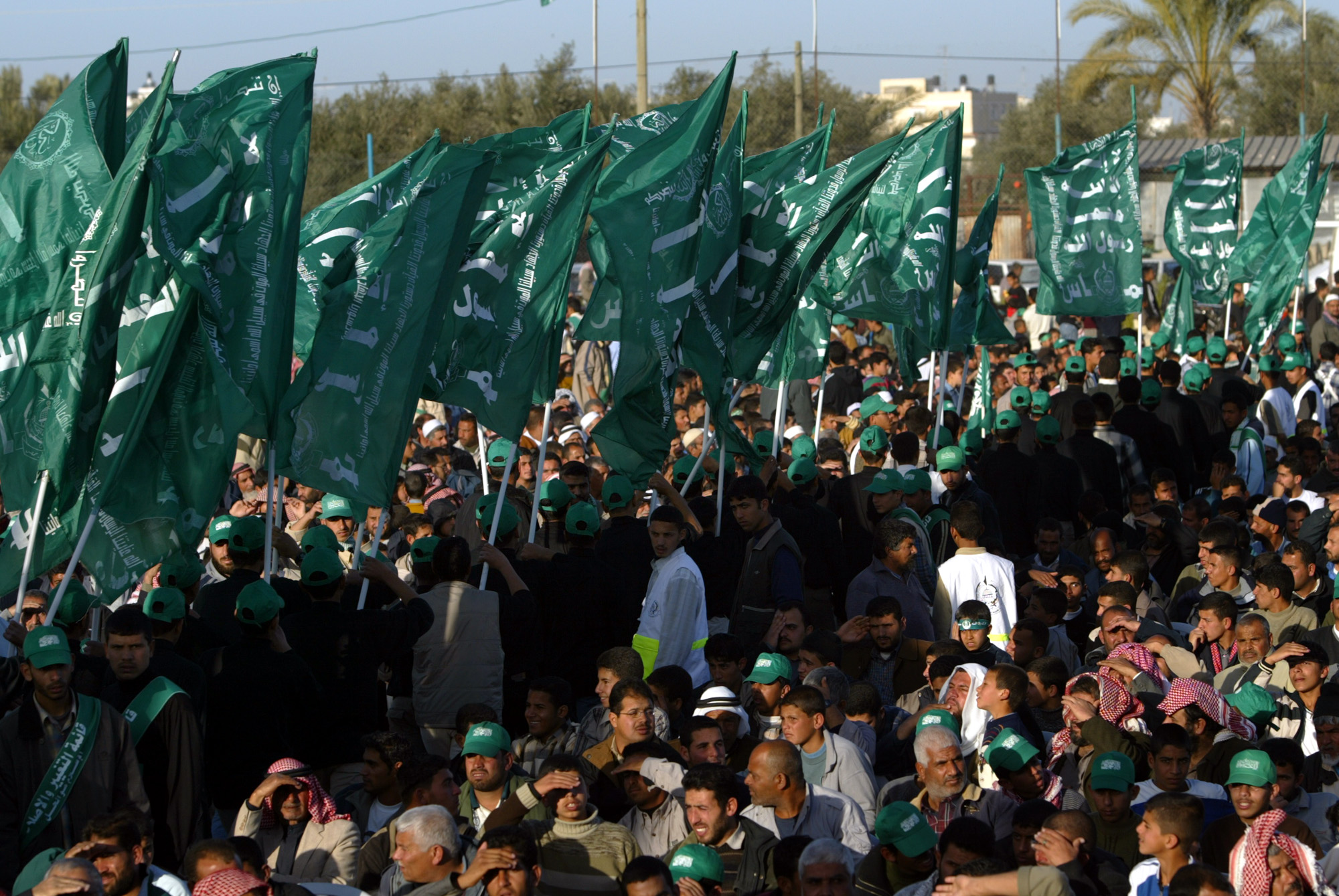
A Hamas rally in Khan Younis on January 28, 2005. Credit: Associated Press
So, on January 25th, 2006, the Palestinian people went to the polls and waited with bated breath to see what their new government would look like. The results were as decisive as they were shocking: Hamas won 74 out of 132 seats in the Palestinian Legislative Council, while Fatah secured a mere 45. (Central Elections Commission-Palestine) Hamas, having built itself up as a rigorously disciplined, religiously moralistic organization in the eyes of the Palestinian people, was reaping the rewards of popular support. Hamas set up a government, but the Quartet on the Middle East (The United States, Russia, The United Nations, and The European Union) refused to acknowledge it unless Hamas committed to the principles of nonviolence. (Kifner) Hamas, being Hamas, refused:
“I tell you that we will protect the enterprise of the resistance, because the Zionist enemy understands only the language of force. It does not recognize peace or the agreements. It does not recognize anything, and it understands only the language of force.” - Hamas Deputy Speaker Ahmad Bar (Laqueur, 543)
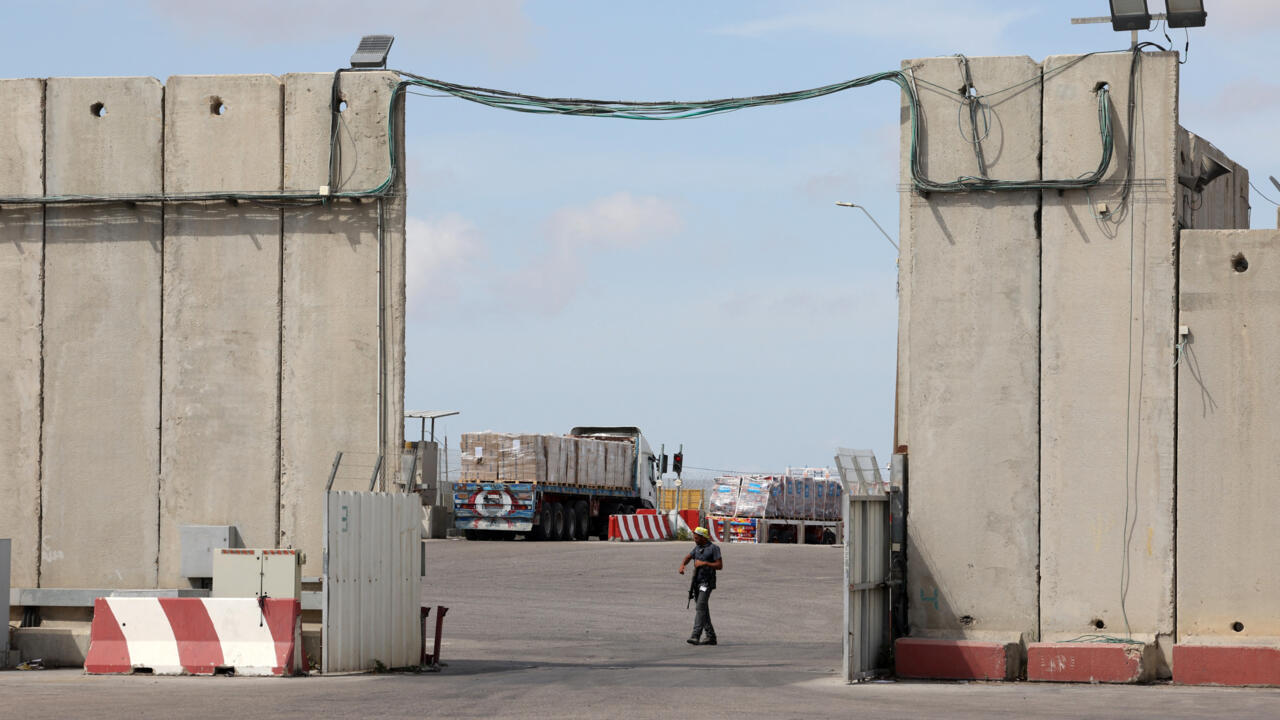
Kerem Shalom crossing.
As a result, the Quartet severed aid to the Palestinian Authority, throwing the government’s finances into chaos. In June of 2006, Hamas-associated militants snuck across the Israeli border using a tunnel near Kerem Shalom Crossing. They attacked an IDF guard post, killing two soldiers and capturing Corporal Gilad Shalit as a hostage. Brazenly declaring responsibility for the attack, Hamas demanded the release of prisoners in exchange for Shalit’s safe return. In response, Israel sent troops into Gaza, capturing numerous newly appointed Hamas ministers and parliamentarians. (UN Division for Palestinian Rights)
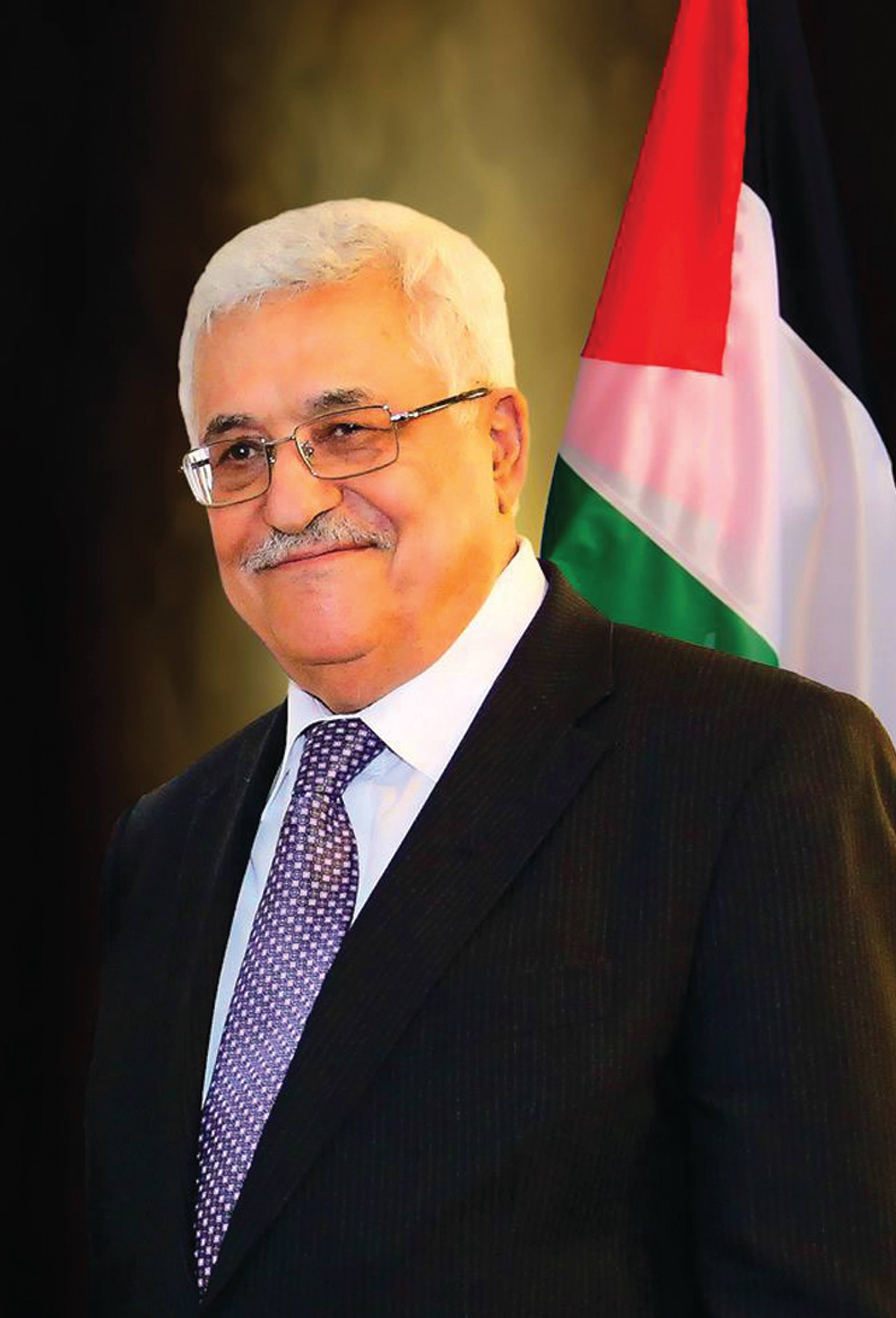
Palestinian President Mahmoud Abbas.
Further expanding the horizons of this new government’s dysfunction was the newly installed Fatah-hardliner president of the PA, Mahmoud Abbas. In a letter to Ismail Haniyeh, the leader of the Hamas government, Abbas declared that key administrative institutions such as health and foreign affairs would effectively remain under the control of Fatah:
“Hamas will get eight ministries: Education and Higher Education, Islamic Waqf, Labour, Local Government, Youth and Sports, Justice, Telecommunications and Information Technology, Economy, and a state minister. Hamas will also name an independent figure to the Planning Ministry and another independent figure as state minister. Fatah will get six ministries: Health, Social Affairs, Public Works, Transportation, Agriculture and Prisoners’ Affairs. Fatah will name the minister for foreign affairs (Ziad Abu Amr) and an independent figure as state minister.” (Laqueur, 536)
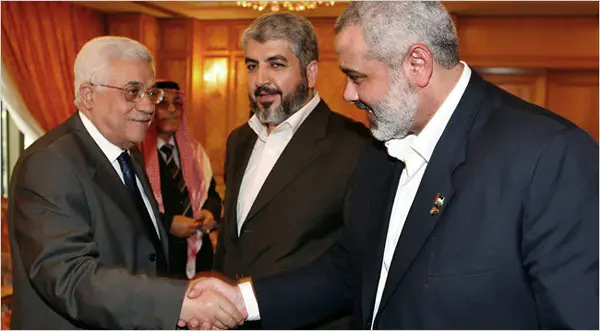
Abbas and Haniyeh shake hands at Mecca. Credit: Reuters
Not to be caught off guard, Abbas also expanded the presidential guard, which was under his direct authority, from 90 to 3500 men. Fatah commanders in the PA Security Forces refused to work with Hamas, and loyalists within the civil service followed suit, going on strike from September 2006 to January 2007. Additionally, Fatah gunmen conducted a campaign of assassination against Hamas officials in Gaza, leading to retaliations in kind by Hamas. The United States and Israel supported these efforts out of self interest, arranging for the transfer of arms to Fatah. Meanwhile, Jordan and Egypt trained battalions of Fatah troops, some of which were deployed in Gaza. (Nicoll, 1-2) In February of 2007, the parties signed the Mecca agreement, forming a national unity government and swearing off spilling Palestinian blood. (Laqueur, 536) However, relations remained strained.

Hamas militants lounging in the former Palestinian Authority headquarters in the Gaza Strip.
Finally, in June of 2007, tensions between Fatah and Hamas came to a head. Believing that the presidential guard was preparing to seize control of the Gaza strip, Hamas struck first, violently evicting Abbas’ security forces from their posts in Gaza. Abbas declared a state of emergency, dissolving the government, but he was powerless to stop the assault. Within a week, Gaza was firmly under the thumb of Hamas, while the West Bank was left to be ruled by Fatah through the Palestinian authority. (Nicoll, 1-2) Abbas appointed Salam Fayyad as prime minister, tasking him with forming a new government which quickly received the recognition of the Quartet. Though international aid could resume, the Palestinian territories were now bifurcated, separated by fruitless infighting.
PART II: Explaining the Failure of Reconciliation
Since 2007, relations between Hamas and Fatah have remained tense, with violence occasionally breaking out despite reconciliation talks. In 2008, the Yemeni government sponsored talks in Sana’a that aimed to return Gaza to its pre-2007 state. Unfortunately, despite both Fatah and Hamas’ signing a joint declaration, dialogue between the two factions afterwards deteriorated. Fatah aimed to achieve such unification by regaining control of Gaza, while Hamas believed it was best achieved by reforming the earlier Hamas-led government. (Sudam) Naturally, these interpretations proved irreconcilable. They proceeded to take jabs at each other, with Abbas ordering the detention of Hamas loyalists in late 2008. In 2009, Hamas forces attacked Gaza residents associated with Fatah, killing and beating dozens. (HRW)
The examples above are laid out not solely because they were instrumental in the development of relations between Fatah and Hamas but also because they are exemplary of why reconciliation has failed to materialize. Each time a foreign mediator has stepped up to the plate hoping to foster a productive dialogue between the two parties, little if any improvement is made. Usually, a sufficiently vague agreement is made which then falls apart at the first hint of implementation, as each side interprets it entirely to their own benefit. Both have used reconciliation talks as instruments for reinforcing their own respective positions rather than as genuine avenues to foster shared government or compromise, with violence escalating rapidly as soon as the pretenses of peacemaking are dropped. In Track II Diplomacy: Lessons From the Middle East, Āghā and Feldman argue that successful reconciliation requires a framework where underlying fears are actively assuaged. The fact that Fatah and Hamas have their own underlying fears which these talks have failed to address is the core reason why reconciliation has remained impossible.
For Hamas, the concern is legitimacy. As an Islamist guerrilla militant group, Hamas was able to flexibly act to establish and maintain its disciplined, moral image. This image is what allowed it to gain popularity in the eyes of the Palestinian people, bringing in new recruits and a shock election victory in 2006. Yet, upon winning the election, Hamas faced the very same problem that Fatah did after the PA was first established: it now had to act not as a militia but a government. Though experienced in running charity operations at a small scale, ruling over the whereabouts 1.5 million residents of the Gaza strip was a different affair entirely.
“As [Hamas] stepped into Fatah’s shoes, it began to lose credibility, becoming hostage to the same dual discourse: good governance to please international donors, even under occupation; and the slogans of liberation and Islamism to please the masses.” - Marwan Bishara (Bishara)
Hamas was effectively caught between a rock and a hard place. Its legitimacy and appeal originating from Islamist ideology and hardline positions against negotiation, Hamas feared that any departure from that will result in its marginalization in Palestinian politics. Furthermore, in the narrative that Hamas’ members perpetuate, violence against Israel is exalted as a necessary religious duty. Yet, conversely, Israel supplied crucial electricity and water to Gaza. Now in control of Gaza, Hamas had to walk the tightrope of actually governing while retaining its identity as a resistance movement. (Schanzer, 189) If Hamas were to relinquish its control over Gaza or disarm as part of a reconciliation agreement, it risked being perceived as capitulating to Fatah and abandoning its core mission.
Fatah, meanwhile, feared a loss of power and international support. Relying on aid from the United States, European Union, and Israel, all of which designate Hamas as a terrorist organization, Fatah was limited in its ability to negotiate. Exacerbating the issue, Fatah’s central position in Palestinian politics was threatened by Hamas. If Hamas were to be brought back into the fold of the Palestinian Authority, another election could topple Abbas’ administration. (Schanzer, 185) Additionally, Fatah had reason to believe that Hamas would leverage any additional influence in the West Bank that reconciliation would bring in order to undermine the Palestinian Authority. In 2014, Israeli intelligence arrested nearly 100 Hamas-affiliated conspirators, alleging a plan to start a new Intifada and overthrow Fatah. (Ginsburg)
Thus, neither side can trust the other enough in order to actually work towards reconciliation. Hamas and Fatah’s respective fears, validated by the events that have unfolded over the course of the past several dedicated, have remained unaddressed by existing efforts. Another core tenet of Āghā and Feldman’s argument in Track II Diplomacy is the importance of informal dialogues in assuaging these fears. In 2006, Fatah and Hamas were actually successfully able to reach a tentative agreement called “The Prisoner’s Document”, which was negotiated by members of five Palestinian resistance organizations in an Israeli prison. (Bishara) The intimate, informal nature of these discussions allowed room to address ideological differences and build trust, which highly publicized meetings like that in Sana’a did not – disagreements over interpreting the framework broke out within hours. (Sudam)
PART III: Looking Towards the Future.
In recent years, attempts at reconciliation between Hamas and Fatah have continued to falter, as numerous agreements have continually failed to address the factions’ respective fears. In 2017, Egypt facilitated the Cairo agreement, aiming to transfer administrative control of Gaza back to the PA and hold general elections for the first time since 2006. Implementation, however, went in the usual direction: Hamas dissolved its administrative committee governing Gaza and then no more progress was made. Fatah accused Hamas of failing to fully relinquish control of Gaza, particularly over security, while Hamas alleged that Fatah was unwilling to integrate Hamas officials into the PA’s institutions. To this day, elections have not been held. The October 7th attacks by Hamas in 2023, which sparked a catastrophic escalation of violence in Gaza, have annihilated any hopes of reconciliation any time soon. The attacks exacerbated divisions between the two factions, drawing widespread international condemnation and making the PA look like chumps.
Efforts at reconciliation, despite their frequency, have repeatedly failed to address the root causes of division: Hamas’s fear of losing its legitimacy as a resistance movement, Fatah’s fear of losing international support and political control, and their divergent visions for relations with Israel. Moving forward, any successful reconciliation will require overcoming these entrenched obstacles and addressing the growing humanitarian crisis in Gaza. Of course, that also depends on the status of Hamas as an organization in the coming years, given the massive damage inflicted by Israel’s ongoing campaign in Gaza. Regardless, any diplomatic peacebuilding effort between Israel and the Palestinian people will first necessitate that those people have a unified voice. It remains to be soon what form that will take going forward.